San Quirico d’Orcia
“Primieramente il Bagno di Vignone, così nominato dal Castello ivi vicino è accomodato e circondato di palazzi e di osterie e ha una Cappella nel mezzo. È di figura quadrata, tutto bello, divisa la fonte in due parti, che col tetto difende dalla pioggia gl’inermi che ivi dentro si bagnano; ma sono per tutto luoghi da ritirarsi, dove ascosi e guardati possono uomini e donne bagnarsi. Prendono quelle acque la virtù loro dal ferro, dall’albume e da poco rame, con mischianza di oro e di argento. Conferiscono al fegato, alla milza e allo stomaco, stemperato e a tutte le membra che concorrono al nutrimento”. (Simone di M. Iacono Tondi – anno 1334)
All it takes to sum up the beauty contained in the “Barbarossa” area, part of the Val d'Orcia World Heritage site, is to mention the four distinctive symbols of San Quirico d'Orcia, famous and renowned throughout the world.
Gli Horti Leonini, pregevole esempio di giardino all’italiana del XVI secolo, il boschetto dei cipressi e la cappella di Vitaleta, vere icone della Toscana, e, non ultima, la vasca di acqua termale di Bagno Vignoni. Mete già frequentate in epoca etrusca e straordinari set cinematografici come “Il Gladiatore”, “il Paziente Inglese”, “Nostalghia” e tanti altri.
Horti Leonini, a remarkable example of Italian gardens of the 16th century, the cypress forest and the Vitaleta chapel are some of the truest Tuscanian icons, along with the thermal water basin of Bagno Vignoni.
These suggestive destinations, already frequented in Etruscan times, today remembered for serving as extraordinary sets for films such as “Gladiator”, “The English Patient”, “Nostalghia” and many others.
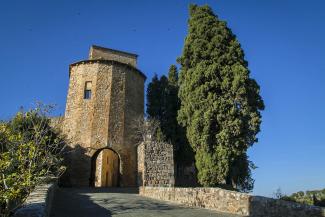
The territory of San Quirico is made of harmony and balance, in a unique concentration of artistic and scenic heritage. The heart of the town is the Collegiata dei Santi Quirico e Giulitta, a Romanic building of great value with a notable portal credited to Giovanni Pisano. Palazzo Chigi and the Chiesa di San Francesco are just as equally remarkable, and together with the Collegiata contribute to make this city an ideal destination for those who love to contemplate extraordinary landscapes made of olive groves, vineyards and dense oak forests interspersed with fertile hills adorned with cypress trees.
The Via Francigena then crosses the entirety of the territory; the Collegiata di San Quirico d’Orcia is the point of arrival of a stage in this ancient path, one that invites the travellers to discover hidden corners and unexpected emotions. The presence of the ancient Ospedale della Scala proves the historical importance that San Quirico d’Orcia used to hold as a centre of hospitality for merchants and pilgrims travelling towards Rome.
www.visittuscany.com www.visitvaldorcia.it | www.valdorciapatrimoniomondiale.it
The Via Francigena path and the two identitary routes “Grand Tour Val d’Orcia Patrimonio Mondiale” and “Grand Tour Val d’Orcia Paesaggio Culturale gravel” allow to get in touch with a vast part of the territory. The “Barbarossa tour” and “Simboli San Quirico gravel” routes complete an offer of great interest to all cyclists.